

 blossom
/käləˌfän/: an inscription at the end of a book or manuscript usually with facts about its production (Merriam-Webster)
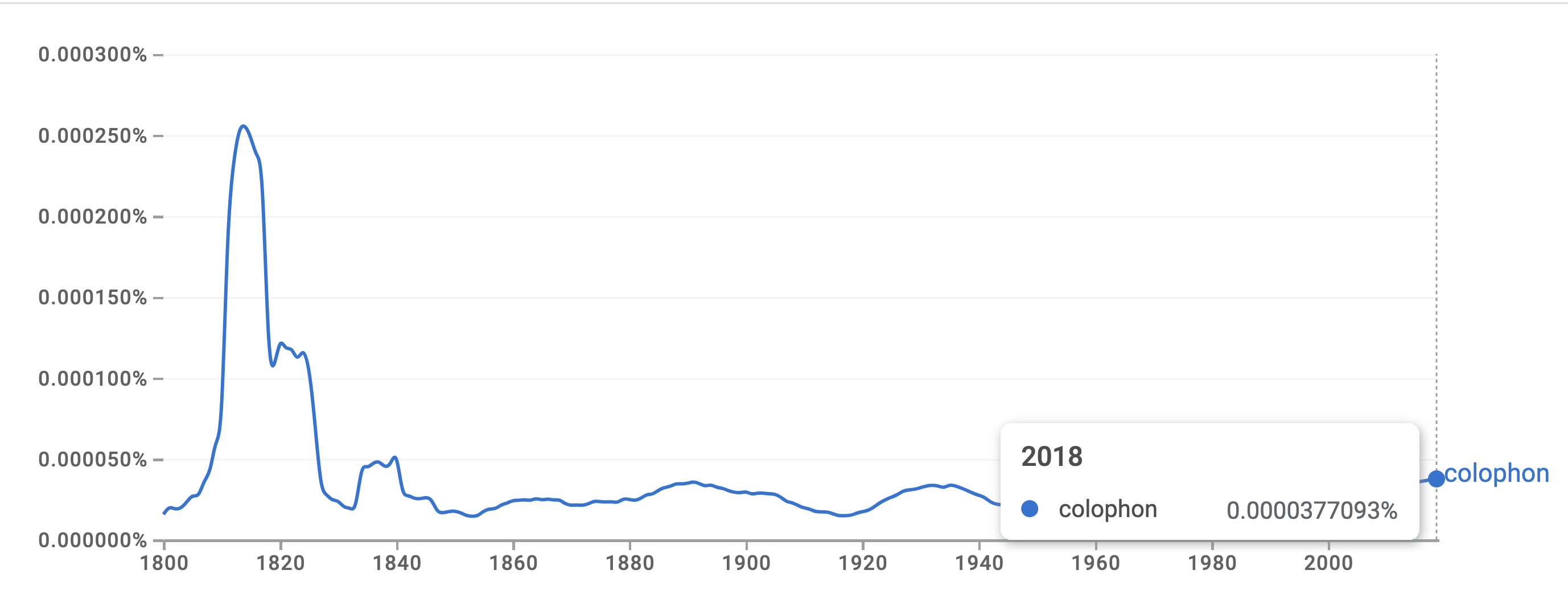
The colophon is an anachronistic literary construct that appears to have fallen out of fashion for nearly two centuries:
With the birth of the internet, we now have a completely new media format to cultivate— and there’s so much more to explain about the inner workings of a website compared to a book. Recently, the term seems to be gaining traction within the IndieWeb community. Here’s an excerpt from their wiki:
A colophon is a useful place to share the principles that govern your website. For instance, if you do not track users, or if you have taken specific precautions to protect privacy, you can list these principles on your colophon.
Having the key principles that govern your site in one place means that any user who visits does not need to read through the archives of your site or speak with you to understand what mattered most to you when you constructed your site.
Although it’s definitely not mainstream yet, I’m starting to see them pop up more frequently in random places. I also have one on my main website!
I care about colophons because they emphasize the process behind creating a website. I generally believe that the the person behind the artifact (and their goals and motivations) are more important than the artifact itself.